
You don’t need a rare bottle or a trained palate to get more out of a glass of whiskey. Start with a small pour, give yourself time to smell it, and notice what changes as you taste. Your notes can be as simple as apple, toasted oak, or more heat than you enjoy. The point is to learn what you like and have a useful reference for the next bottle.
Give yourself a clear starting point
Choose a bottle you already have and read its label before pouring. Write down the expression and bottling strength so you can return to the same whiskey later. Save the producer’s tasting notes until you have made a few observations of your own; a suggested flavor can be hard to set aside once you have read it.
For a comparison, choose two bottles with a clear difference: bourbon and rye, for example, or two expressions from one producer. Keep the question manageable. You might want to know which feels drier, which has more fruit, or which you would rather drink again. One comparison cannot tell you everything about a style.
Set out a glass and water
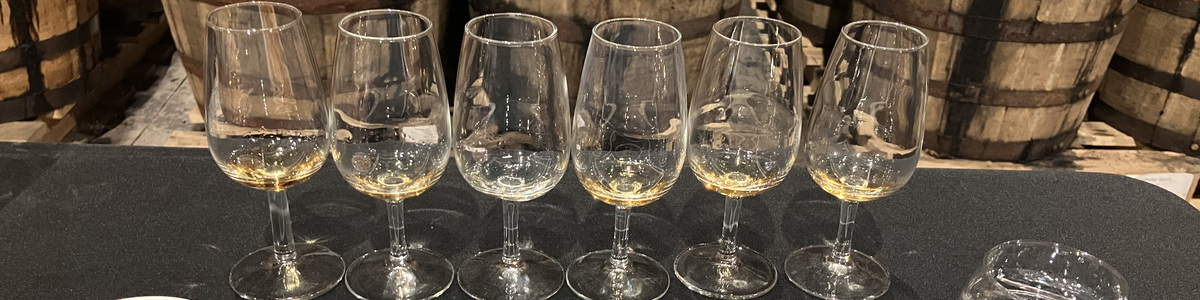
Use a clean glass and a place without competing scents from candles, perfume, cooking, or smoke. A tulip-shaped tasting glass gathers aromas near its opening, but you can begin with the glass you have. If you compare two whiskeys, matching glasses make the exercise more consistent.
Pour only enough for a few small tastes. Keep drinking water nearby, along with a separate small glass of plain water and a teaspoon or dropper if you want to try dilution. Give each bottle its own glass rather than pouring a second whiskey over what remains of the first.
Look, without ranking the color
Hold the glass against a pale background and note what you see: straw, gold, amber, or a deeper brown. Color is worth recording, but it cannot establish a whiskey’s age or quality on its own. Cask history and, where permitted, added coloring complicate that judgment. Read the label and producer’s maturation details for the information the glass cannot supply.
The streaks that run down the inside of a glass are often called legs. They are not a quality score or a reliable way to determine age. There is no need to spend long studying them; the aroma and taste will give you more useful notes about whether you enjoy the pour.
Approach the aroma gently
Bring the glass toward your nose gradually and take a short, gentle sniff. If alcohol overwhelms the aroma, move it farther away and pause before trying again. You do not need to put your nose into the glass or take a deep breath.
Start with a broad impression. Is it fruity, grainy, woody, smoky, or spicy? Then try a more familiar word if one comes to mind: apple rather than fruit, toasted bread rather than grain. There is no prize for finding the most poetic descriptor. A word that helps you remember the whiskey is useful, even if someone beside you chooses another.
Set the glass down between sniffs. Return to it after a short pause and note any difference, without assuming every whiskey must become more complex with time.
Taste for flavor and texture
Take a small sip and let it move across your mouth before swallowing. Notice the overall impression first. It may feel light, oily, drying, sharp, or rounded. Those observations can be easier to name than a specific fruit or spice.
If you want another taste, give yourself a moment first. Ask what you notice beyond the alcohol warmth. Does a sweetness suggest vanilla or caramel? Is the spice closer to pepper, cinnamon, or something you cannot yet name? Write down uncertainty rather than forcing a description.
Keep flavor and intensity separate in your notes. You might enjoy a whiskey’s fruit character while finding its strength uncomfortable, or prefer a quieter pour that makes its flavors easier to follow. Bottling strength is a useful detail, not a ranking.
Describe what remains
The finish is the flavor and sensation that remain after swallowing. Notice whether it fades quickly or stays, and whether what lingers is something you enjoy. Oak dryness, citrus, smoke, sweetness, and warmth can each leave a different impression.
A long finish is not automatically better. A brief finish may suit the whiskey, while a persistent bitterness may be unwelcome. Record duration and character separately: “short, fresh apple” tells you more than “short, therefore poor.”
Try a little water
If you want to explore dilution, add a few drops of plain water, gently move the glass, and smell it again before tasting. Water lowers the alcohol concentration and can change the aroma and flavor you notice. Start with a little so you can follow the change.
Ask a specific question: is the aroma easier to approach, has a flavor become clearer, or has the texture lost something you liked? More expressive and more enjoyable are separate judgments. You can prefer the whiskey neat, diluted, or in a different drink entirely.
Keep notes you can use again
A short record is enough: bottle and strength, two or three aromas, texture, finish, any water added, and whether you would choose another glass. If you compare bottles, use the same prompts for each rather than writing a long description for one and a verdict for the other.
Leave room for context. A different glass, a meal, or a different day may change your impression. Your notes describe that tasting; they do not have to settle your opinion of the bottle forever.
Finish with a decision you can use. Perhaps you would buy the bottle again, try a lower-strength expression, or look for more of the apple note you enjoyed. That is enough to make the tasting useful without turning it into an exam.